
Top 20 Food Startups In India | Healthy & New Food Companies In India
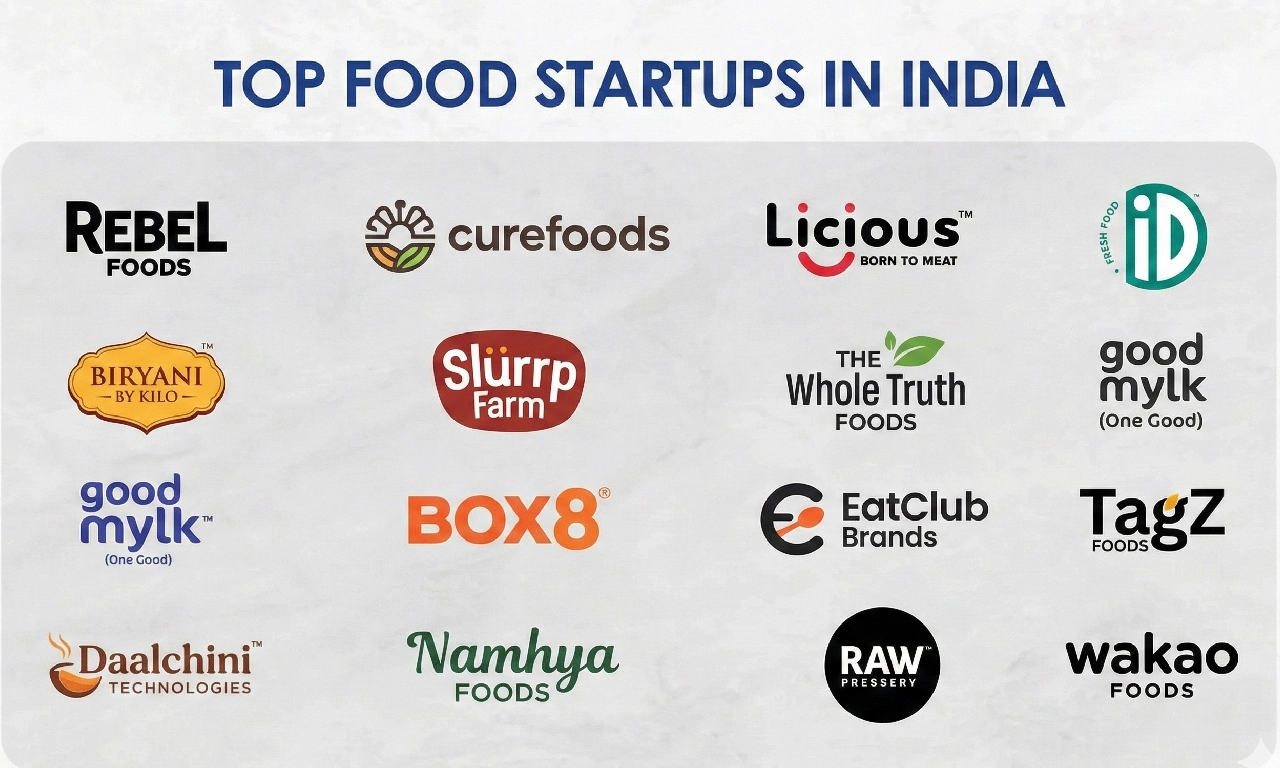
India's food startup ecosystem is experiencing unprecedented momentum. As consumer preferences shift toward health-conscious, sustainable, and technologically-enabled food solutions, entrepreneurs are disrupting traditional food systems at scale. Today, Indian food tech companies are attracting billions in venture capital, expanding globally, and preparing for public market debuts.
Why this matters now: The global foodtech sector has matured beyond food delivery. Innovation now spans alternative proteins, supply chain transparency, personalized nutrition, and cloud kitchen ecosystems - areas where Indian startups are claiming significant market share.
What Defines a Food Startup?
A food startup is a technology-enabled company that leverages innovation, digital infrastructure, and operational efficiency to solve problems across food production, distribution, and consumption. Unlike traditional food companies that compete on brand heritage, food startups compete on velocity, data, and scalability.
Food startups fall across the entire supply chain - from farm-to-table logistics (iD Fresh Food), direct-to-consumer delivery (Biryani By Kilo), alternative proteins (Goodmylk), to B2B cloud kitchen networks (Rebel Foods). Each operates with lean structures, rapid iteration, and customer-centric product development.
Types of Food Startups Reshaping India's Market
Indian food startups cluster around distinct categories, each addressing unique consumer pain points:
Cloud Kitchen Networks: Rebel Foods (operating Faasos, Behrouz Biryani, Oven Story) and Curefoods (EatFit, TRIBAL) operate 200+ kitchens combined. They strip away costly real estate while optimizing menus using AI and consumer data. These players compete on consistency, speed, and affordable pricing.
Alternative Proteins: Goodmylk (now One Good), Evo Foods, Wakao Foods, and Biokraft Foods target India's growing vegan and plant-based segment. Goodmylk's plant-based milk costs 40-50% less than competitor brands, widening market accessibility.
Fresh Food D2C Models: Licious (fresh meat, seafood) and iD Fresh Food (daily dosa batter, parathas) control supply chains end-to-end. Both ship directly to households, emphasizing freshness and traceability - critical value propositions in categories historically fragmented by local vendors.
Health & Wellness Foods: TagZ Foods (low-fat chips), Slurrp Farm (millet-based children's snacks), and Raw Pressery (cold-pressed juices) capitalize on rising health consciousness. These brands differentiate on transparency, clean labels, and functional benefits.
Smart Retail & Foodservice Tech: Daalchini Technologies operates 200+ smart vending machines across offices and campuses, distributing D2C brands and established CPG products. This model bridges convenience and operator margins.
Supply Chain & Logistics Tech: While not primary food producers, companies like Freshco and AgFresh enable supply-chain efficiency - critical infrastructure for startups scaling rapidly.
Top Food Startups In India: Cloud Kitchens & Food Tech
These companies leverage data and shared infrastructure to deliver prepared food without traditional dine-in overhead.
| Startup Name | Valuation / Funding | Founder(s) | HQ | Key Metric |
|---|---|---|---|---|
| Rebel Foods | $1.4B (Unicorn) | Jaydeep Barman | Mumbai | 450+ Kitchens globally |
| Curefoods | $744M+ (IPO Bound) | Ankit Nagori | Bengaluru | ₹745 Cr Revenue (FY25) |
| EatClub Brands | $102.7M (Funding) | Amit Raj, Anshul Gupta | Bengaluru | 300+ Kitchens |
| Biryani By Kilo | $100M+ | Vishal Jindal | Gurugram | 100+ Outlets |
| FreshMenu | ₹200 Cr ARR Target | Rashmi Daga | Bengaluru | Full-stack Kitchen Model |
| Daalchini | $4M (Funding) | Prerna Kalra | Noida | 850+ Smart Vending Machines |
1. Rebel Foods: The Cloud Kitchen Giant
Website: faasos.in | Headquarters: Mumbai | Funding: $773M+
Founded: 2011 (as Faasos) | Founders: Jaydeep Barman, Kallol Banerjee, Rohit Choudhary, Hari Menon | Employees: 2,000+
About: Operating the world's largest cloud kitchen network with 450+ kitchens across 8+ countries, Rebel Foods incubates multiple brands like Faasos and Behrouz Biryani. Their differentiator is a multi-brand strategy powered by operational excellence—using a proprietary operating system to run purpose-built brands for distinct cuisines from a single kitchen, maximizing efficiency and minimizing waste.
2. Curefoods: Building a House of Brands for IPO
Website: www.curefoods.in | Headquarters: Bengaluru | Funding: $744.8M+
Founded: 2020 (Spin-off from Curefit) | Founder: Ankit Nagori | Employees: 1,500+
About: Curefoods is a roll-up foodtech company that acquires and scales D2C F&B brands like EatFit and CakeZone. Their capital-light model mirrors Western aggregators, acquiring successful brands post-product-market fit and leveraging shared infrastructure to improve margins while maintaining a health-focused positioning.
3. Box8 / EatClub Brands: Full-Stack Cloud Kitchen Pioneer
Website: www.box8.in (now EatClub Brands) | Headquarters: Mumbai | Funding: $72M (Box8), $102.7M (EatClub)
Founded: 2012 (Box8) | Founders: Amit Raj, Anshul Gupta (IIT alumni) | Employees: 1,200+
About: Pioneering the full-stack cloud kitchen model in India, EatClub Brands operates 300+ kitchens under brands like MOJO Pizza and Box8. Their multi-brand architecture on shared infrastructure creates operational leverage, allowing them to target distinct customer segments and cuisines from the same facility, reducing new concept failure risk.
4. Biryani By Kilo - Specialized Cuisine Cloud Kitchen
Website: www.biryanibyKilo.com | Headquarters: Gurugram | Funding: $52M[1]
Founded: 2015 | Founders: Vishal Jindal, Kaushik Roy | Employees: 300+
About: Specializing exclusively in authentic regional biryanis cooked in individual earthen Handis, Biryani By Kilo operates 100+ outlets. Their category focus and quality obsession create defensibility in a fragmented market, offering branded consistency and scalability while preserving traditional cooking methods.
5. FreshMenu: Cloud Kitchen Evolution
Website: www.freshmenu.com | Headquarters: Bengaluru | Funding: ₹3.5 Cr (latest), total ~₹30+ Cr[2]
Founded: 2014 | Founder: Rashmi Daga (IIM Ahmedabad) | Employees: 400+
About: FreshMenu delivers fresh, customizable meals prepared at central facilities, targeting busy professionals. Their focus on quality and customization in a commoditized market sets them apart, offering nutritionally balanced meals with adjustable protein and carb options rather than standard quick-service fare.
6. Daalchini Technologies - Automated Retail Infrastructure
Website: www.daalchini.co.in | Headquarters: Noida | Funding: $4M (Series A)
Founded: 2017 | Founders: Prerna Kalra, Vidya Bhushan (Ex-Paytm) | Employees: 40+
About: Daalchini operates India's largest network of IoT-enabled smart vending machines, dispensing snacks and home-cooked meals in corporate and educational spaces. Their "retail-as-a-service" model democratizes distribution for D2C brands, offering instant placement across high-traffic locations without traditional retail overhead or commissions.
Fresh Food & D2C Supply Chain
Startups in this sector own the farm-to-fork supply chain to guarantee freshness and quality.
| Startup Name | Valuation / Funding | Founder(s) | HQ | Key Metric |
|---|---|---|---|---|
| Licious | $1.2B+ (Unicorn) | Abhay Hanjura, Vivek Gupta | Bengaluru | 90% Repeat Purchase Rate |
| iD Fresh Food | ₹4,000 Cr+ (Est.) | PC Musthafa | Bengaluru | ₹1,000 Cr Run-Rate |
7. Licious: Pioneering Fresh Meat D2C
Website: www.licious.in | Headquarters: Bengaluru | Funding: $489.9M
Founded: 2015 | Founders: Abhay Hanjura, Vivek Gupta | Employees: 800+
About: India's largest D2C fresh meat and seafood brand, Licious operates a farm-to-fork model with uncompromising supply chain control. By owning the entire cold chain and processing, they deliver fresh, FSSC 22000 certified products within hours, differentiating themselves from unorganized competitors through guaranteed hygiene and quality.
8. iD Fresh Food: Disruptive Fresh Food at Scale
Website: www.idfreshfood.com | Headquarters: Bengaluru | Funding: ₹338 Cr ($41M+)
Founded: 2005 | Founder: Musthafa Cheriammed Pathayickode | Employees: 500+
About: Manufacturing preservative-free, fresh staples like dosa batter and parathas, iD Fresh Food disrupted a legacy category by creating a daily-refresh supply model. Their ability to deliver fresh products daily via quick-commerce and retail partnerships rivals home-cooked freshness, overcoming the convenience trade-off.
Healthy Food Startups in India: Snacking & Wellness
Brands focusing on clean labels, functional ingredients, and modernizing traditional nutrition.
| Startup Name | Valuation / Funding | Founder(s) | HQ | Key Metric |
|---|---|---|---|---|
| The Whole Truth | Not Disclosed | Shashank Mehta | Mumbai | 80% D2C Revenue share |
| Slurrp Farm | ₹59.9 Cr (Funding) | Shauravi Malik, Meghana Narayan | Gurugram | 5,000+ Retail Stores |
| TagZ Foods | $4.2M (Total Funding) | Anish Basu Roy | Bengaluru | 30x Volume Growth |
| Raw Pressery | Not Disclosed | Anuj Rakyan | Mumbai | Cold-Pressed Technology |
| Namhya Foods | Not Disclosed | Ridhima Arora | Bengaluru | ₹100 Cr Revenue Target (FY26) |
| Tandurust | Not Disclosed | Team of Nutritionists | Bengaluru | AI + Human Coaching |
| HealthifyMe | ~$145M - $165M (Total) | Tushar Vashisht, Sachin Shenoy, Mathew Cherian | Bengaluru | AI-led health and fitness app |
9. The Whole Truth Foods: Radical Transparency in Clean Snacking
Website: www.thewholetruthfoods.com | Headquarters: Mumbai | Funding: Not Disclosed
Founded: 2016 | Founder: Shashank Mehta | Employees: 100+
About: The Whole Truth Foods manufactures ultra-clean snacks using exclusively whole ingredients with radical transparency. Their core differentiator is ingredient-level minimalism—declaring every ingredient on the front of the pack and avoiding hidden additives—building consumer trust in a deceptive market.
10. Slurrp Farm: Kids' Nutrition Redefined Through Millets
Website: www.slurrpfarm.com | Headquarters: Gurugram | Funding: ₹59.9 Cr ($7.2M)
Founded: 2017 | Founders: Mother-daughter entrepreneurs | Employees: 150+
About: Creating millet-based, preservative-free foods for children, Slurrp Farm addresses the challenge of delivering nutrition without sacrificing taste. Their founder authenticity and millet-forward positioning differentiate them in the kids' snack market, making nutrient-dense grains appealing through familiar formats like pancakes and noodles.
11. TagZ Foods: Health-First Snacking for Gen-Z
Website: www.tagzfoods.com | Headquarters: Bengaluru | Funding: $4.2M (Total)
Founded: 2019 | Founders: Anish Basu Roy, Sagar Bhalotia | Employees: 120+
About: TagZ Foods manufactures popped potato chips with 50% less fat, targeting health-conscious Gen-Z consumers. Positioning "better-for-you" snacking for active lifestyles rather than restrictive diets, they capture millennials seeking guilt-free indulgence, evidenced by rapid volume growth and strong product-market fit.
12. Raw Pressery - Cold-Pressed Juice Pioneer
Website: www.rawpressery.com | Headquarters: Mumbai | Funding: Not Disclosed
Founded: 2014 | Founder: Anuj Raykan (Ex-VP Sales, Nirav Modi) | Employees: 150+
About: Producing 100% natural cold-pressed juices without preservatives, Raw Pressery pioneered the category in India. Their use of cold-extraction technology and fresh doorstep delivery preserves nutrition and taste, creating a moat in a market dominated by heat-pasteurized alternatives.
13. Namhya Foods - Ayurvedic Wellness at Scale
Website: www.namhyafoods.com | Headquarters: Bengaluru | Funding: Not Disclosed (Angel/Shark Tank)
Founded: 2019 | Founder: Ridhima Arora | Employees: 100+
About: Namhya Foods creates Ayurvedic wellness products targeting lifestyle diseases like PCOS and diabetes. The brand combines founder authenticity with Ayurvedic credibility, offering evidence-backed traditional solutions that resonate with educated consumers seeking natural remedies for modern health issues.
14. Tandurust: Holistic Nutrition & Wellness
Website: www.tandurustlife.in | Headquarters: Bengaluru | Funding: Not Disclosed
Founded: 2015 | Founders: Nutrition experts team | Employees: 60+
About: Providing personalized nutrition planning and lifestyle coaching, Tandurust targets weight management and chronic disease support. Their AI plus human nutritionist hybrid model scales personalized nutrition affordably, addressing both individual consumer needs and corporate wellness programs efficiently.
15. HealthifyMe: The AI-Led Health & Wellness Pioneer
Website: healthifyme.com[3] | Headquarters: Bengaluru | Funding: ~$145M - $165M (Total)
Founded: 2012 | Founders: Tushar Vashisht, Sachin Shenoy, Mathew Cherian | Employees: 1,500+
About: India's largest AI-led health and fitness app, HealthifyMe combines AI nutritionists with human coaching. Their core differentiator is "AI + Human Empathy," featuring "Ria," an AI nutritionist trained on billions of Indian diet data points, allowing for hyper-personalized advice that Western competitors lack.
New Food Brands in Alternative Proteins (Plant-Based & Cultivated)
The future of food, focusing on sustainability and cruelty-free alternatives.
| Startup Name | Valuation / Funding | Founder(s) | HQ | Key Metric |
|---|---|---|---|---|
| Evo Foods | $4.3M (Funding) | Kartik Dixit | Bengaluru | Liquid Egg Alternative |
| Goodmylk (One Good) | $1.8M (Funding) | Abhay Rangan | Bengaluru | Price Parity w/ Dairy |
| Wakao Foods | ₹75 Lakh (Shark Tank) | Sairaj Dhond | Pune | 1-Year Shelf Life (Ambient) |
| Biokraft Foods | ₹2 Cr (Pre-seed) | Kamalnayan Tibrewal | Mumbai | 3D Bioprinted Meat |
16. Evo Foods: India's Plant-Based Egg Pioneer
Website: www.evofoods.in | Headquarters: Bengaluru | Funding: $4.3M
Founded: 2019 | Founders: Kartik Dixit, Shraddha Bhansali | Employees: 80+
About: Producing a 100% plant-based liquid egg replacer, Evo Foods uses proprietary biotechnology to match the taste and texture of conventional eggs. Their superior nutritional profile and plant-protein formula enable adoption in foodservice without quality compromise, targeting the growing alternative protein market.
17. Goodmylk (One Good): Democratizing Plant-Based Dairy
Website: www.goodmylk.in | Headquarters: Bengaluru | Funding: $1.8M
Founded: 2016 | Founders: Abhay Rangan, Mother-son duo (vegan activists) | Employees: 80+
About: Goodmylk (One Good) makes affordable plant-based dairy alternatives like cashew-oat milk. By engineering products priced 40-50% lower than competitors, they address India's price sensitivity, democratizing vegan dairy and enabling mass-market adoption through affordability.
18. Wakao Foods: Vegan Jackfruit Revolution
Website: www.wakaofoods.com | Headquarters: Pune | Funding: ₹75 Lakh (Shark Tank India)
Founded: 2020 | Founder: Sairaj Dhond (Criminal Lawyer) | Employees: 80+
About: Transforming raw jackfruit into vegan meat alternatives, Wakao Foods offers shelf-stable products requiring no refrigeration. This innovation solves cold-chain constraints in India, allowing widespread distribution of sustainable protein to tier-2 and tier-3 cities without the logistical challenges of frozen meat alternatives.
19. Biokraft Foods: Cultivated Meat Frontier
Website: www.biokraftfoods.com | Headquarters: Mumbai | Funding: ₹2 Cr ($230K pre-seed)
Founded: 2022 | Founder: Kamalnayan Tibrewal | Employees: 25+
About: Pioneering cultivated meat in India, Biokraft Foods uses proprietary 3D bioprinting technology to grow meat from animal cells. Their plant-based and algal scaffolding technology reduces costs and ethical concerns, positioning them to tap into India's vegetarian-leaning market with sustainable, slaughter-free meat options.
Gourmet & Specialty Retail
Curated marketplaces and niche offerings for the discerning consumer.
| Startup Name | Valuation / Funding | Founder(s) | HQ | Key Metric |
|---|---|---|---|---|
| Urban Platter | Bootstrapped | Chirag Kenia | Mumbai | 1,200+ SKU Portfolio |
20. Urban Platter - Gourmet Grocery Democratized
Website: www.urbanplatter.com | Headquarters: Mumbai | Funding: Bootstrapped (₹54.1 Cr FY24 revenue)
Founded: 2015 | Founder: Chirag Kenia | Employees: 82
About: A curated gourmet food marketplace, Urban Platter offers 1,200+ specialty ingredients with a focus on provenance and transparency. Their editorial approach to curation builds trust in a cluttered market, allowing customers to discover high-quality, international, and vegan products with confidence.
Bonus - Living Food: The "Fresh" Gourmet Marketplace
Website: livingfood.co[4] | Headquarters: Bengaluru | Funding: ~$8.8M (Series A)
Founded: 2018 | Founders: Akash Sajith, Shikha Lakhanpal, Niranjan K S | Employees: 80+
About: Living Food operates a premium marketplace for fresh, artisanal, and farm-to-table products. Their "Speed + Curation" moat combines the speed of quick commerce with the quality of a gourmet store, solving the trust deficit in fresh food by enforcing strict quality protocols and traceability for high-value customers.
Top Food & Beverage Startups In India: Complete List
The table below consolidates India's most significant foodtech players, tracked by funding, scale, and market
| Rank | Startup Name | Headquarters | Category | Funding Raised | Current Stage |
|---|---|---|---|---|---|
| 1 | Rebel Foods | Mumbai | Cloud Kitchen Network | $773M+ | Series G (Pre-IPO) |
| 2 | Curefoods | Bengaluru | Cloud Kitchen Network | $744.8M+ | IPO Ready (SEBI Approved) |
| 3 | EatClub Brands | Bengaluru | Cloud Kitchen (Multi-brand) | $102.7M | Secondary Market |
| 4 | Biryani By Kilo | Gurugram | Specialty Cloud Kitchen | $52M | Series B+ |
| 5 | FreshMenu | Bengaluru | Meal Delivery Service | ₹30 Cr+ | Pre-Series A |
| 6 | Daalchini Technologies | Noida | Smart Vending Machines | $4M | Series A |
| 7 | Licious | Bengaluru | Fresh Meat & Seafood | $489.9M | Series F2 |
| 8 | iD Fresh Food | Bengaluru | Fresh Food Products | ₹338 Cr ($41M) | Series D |
| 9 | HealthifyMe | Bengaluru | AI Health & Fitness | ~$165M | Series C |
| 10 | The Whole Truth Foods | Mumbai | Clean Label Snacks | Not Disclosed | Growth Stage |
| 11 | Slurrp Farm | Gurugram | Health Snacks for Kids | ₹59.9 Cr ($7.2M) | Series B |
| 12 | TagZ Foods | Bengaluru | Healthy Snacks (D2C) | $4.2M | Pre-Series A |
| 13 | Raw Pressery | Mumbai | Cold-Pressed Juices | Not Disclosed | Growth Stage |
| 14 | Namhya Foods | Bengaluru | Ayurvedic Wellness | Not Disclosed | Post-Seed |
| 15 | Evo Foods | Bengaluru | Plant-Based Egg Alternatives | $4.3M | Seed |
| 16 | Goodmylk (One Good) | Bengaluru | Plant-Based Dairy | $1.8M | Seed Extension |
| 17 | Wakao Foods | Pune | Jackfruit-Based Vegan | ₹75 Lakh | Shark Tank Funded |
| 18 | Biokraft Foods | Mumbai | 3D Cultivated Meat | ₹2 Cr | Pre-Seed |
| 19 | Urban Platter | Mumbai | Gourmet Grocery (D2C) | Bootstrapped | Growth Stage |
| 20 | Living Food | Bengaluru | Fresh Gourmet Marketplace | $8.8M | Series A |
Challenges Facing Food Startups
The food startup landscape is evolving rapidly, but growth comes with distinct hurdles. Here are the core challenges currently facing the industry:
1. Unit Economics
Food delivery and cloud kitchens often operate on thin gross margins (8-15%). High Customer Acquisition Costs (CAC) mean startups heavily rely on high repeat rates just to break even, making sustainable profitability a constant struggle.
2. Supply Chain Complexity
Relying on third-party cold chains frequently leads to spoilage and inconsistent product quality. Conversely, building and managing an owned supply chain to guarantee quality is extremely capital-intensive and operationally demanding.
3. Regulatory Uncertainty
Navigating the complex web of FSSAI compliance, GST variability across different products, and strict regulations regarding health claims creates significant operational friction and legal overhead for new brands.
4. Pricing Pressure
Indian consumers remain highly price-sensitive. Premium, healthy, or vegan options often struggle to scale beyond Tier-1 cities, finding it difficult to compete with traditional, lower-cost alternatives in the mass market.
5. Talent Retention
The industry faces high attrition rates in critical operational roles such as chefs, delivery personnel, and logistics staff. This turnover makes it difficult to maintain service consistency and operational efficiency as companies scale.
Key Food Startup Trends in India
Four macro trends are converging to fuel this boom:
-
Consumer Demand Shift: Urban India's 700M+ digital natives now demand transparency and health-first options. Brands like Licious have captured this by building D2C channels that bypass traditional, opaque supply chains.
-
The Protein Rush: Rising awareness of India's "protein gap" is driving a surge in startups focused on clean meat and plant-based alternatives (like The Whole Truth and Evo Foods), transforming nutrition from a commodity to a lifestyle choice.
-
Tech Infrastructure: Cloud kitchens and hyperlocal logistics have lowered entry barriers. Startups no longer need 50 physical outlets to scale just smart unit economics and a digital-first playbook.
-
Capital Velocity: With over $2B raised (2023-25), the sector has matured. Giants like Rebel Foods and Curefoods crossing the $400M+ funding mark signals strong investor confidence in exit outcomes.
Global Food Startups Reshaping Worldwide Markets
While India's startup ecosystem is maturing, global foodtech unicorns are setting precedent for category transformation and capital deployment:
NotCo (Chile, $366M funded): Uses AI ("Giuseppe") to identify plant-based ingredient combinations that replicate animal products at molecular level. Produces plant-based dairy, meat, and eggs indistinguishable from animal versions. Expanding globally across Latin America, North America, and Europe.
Impossible Foods (USA, $7B valuation): Manufactures plant-based beef using heme (proprietary ingredient extracted from soy plants). Impossible Burger replicates conventional beef's taste, texture, and nutritional profile. Scaled to 350,000+ retail locations globally and major QSR chains (Burger King, McDonald's pilots).
Upside Foods (USA, Pre-IPO): Cultivated chicken manufacturer (cell-cultured without animal farming). First company to receive USDA regulatory approval (June 2023) for cultivated meat. Scaling production toward commercialization in select US restaurants.
HelloFresh (Germany, €9B market cap, public): Meal-kit delivery company using AI for meal personalization and demand forecasting. Delivers pre-portioned ingredients + recipes to homes. Operating across North America, Europe, and Australia with 8M+ active customers.
Instacart (USA, $39B valuation): E-grocery logistics platform connecting retailers to consumers with 15-minute delivery promise. Operates across 100+ North American cities, partnering with major grocery chains (Whole Foods, Kroger, Albertsons).
Zepto (India, $3.6B valuation): Quick-commerce grocery startup delivering essentials in 10-15 minutes. Raised $500M+ at $3.6B valuation. Expansion to Dubai, expanding India footprint aggressively.
Why Food Startups Matter to Investors and Founders
For Founders:
Food startups solve genuine consumer pain points - convenience, health, sustainability, affordability. India's scale (1.4B people, 700M+ internet users), rising incomes, and behavioral shifts toward D2C create a massive opportunity. Unlike mature Western markets, India's food system remains fragmented, leaving room for tech-enabled roll-ups to consolidate value.
For Investors:
Food startups offer high multiples if they achieve unit economics efficiency. Rebel Foods, Curefoods, and Licious trade on 2-3x revenue multiples (normal for profitable D2C brands). Network effects (supply chain, logistics) create defensibility for leaders. International expansion (Middle East, SE Asia, US) multiplies TAM. IPO pipelines (Curefoods, Rebel Foods in 2025-26) provide liquidity pathways.
Global Food Startups Reshaping the Worldwide Market
While India's startup ecosystem is nascent, global foodtech unicorns have redefined international categories:
Alternative Proteins: NotCo (Chile, $366M funded) uses AI ("Giuseppe") to create plant-based dairy and meat indistinguishable from animal-derived products. Impossible Foods (USA, $7B valuation) manufactures plant-based beef burgers. Upside Foods (USA) pioneered cultivated chicken, gaining regulatory approval in 2023.
Precision Fermentation: Perfect Day (formerly Muufri) engineered yeast to produce milk proteins, enabling animal-free dairy. This technology will be transformative for protein production at scale.
Supply Chain Innovation: Instacart (USA, $39B+ valuation) and Ocado (UK, public) democratized e-grocery, reducing friction from shopping to delivery. Zepto (India, founded 2021) and Blinkit replicated this model for India's quick-commerce opportunity.
Data-Driven Personalization: HelloFresh (Germany, public) and Factor (USA) use data analytics to customize meal plans. HealthifyMe (India) extends personalization into nutrition coaching via AI + human coaches.
Kitchen Robotics: Miso Robotics integrates AI automation into kitchen workflows, automating fry cook roles and increasing throughput.
Conclusion: The Next Wave of Food Innovation
India's food startup ecosystem is transforming beyond delivery - vertically integrated supply chains, alternative proteins, and AI nutrition now rival enterprise players.
Founders: 70%+ unorganized market = venture-scale rollups in snacks, dairy, meat, beverages.
Investors: Macro trends (health, sustainability) + IPOs (Curefoods SEBI-approved, Rebel Foods 2025-26).
GrowthJockey - Full Stack Venture Builder accelerates food startups from idea to scale:
-
Market Validation - Data-driven PMF before capex.
-
Unit Economics - Isolate CAC, margins, delivery costs.
-
Operations Architecture - Supply chain, QA, compliance playbooks.
-
Capital Strategy - Stage-aligned fundraising.
-
AI Intelligence - Menu optimization, demand forecasting (intellsys.ai).
Food startups are capital-intensive. GrowthJockey embeds venture discipline. Contact us to build India's next Licious.
Related Blogs
If you’re exploring startup ideas, business models, or sector-specific opportunities, the guides below can help you go deeper. Each resource covers a different stage or industry within the startup ecosystem - making it easier to compare ideas, understand execution paths, and identify opportunities relevant to your goals.
FAQs: Food Startups Explained
Q1. What's the difference between cloud kitchens and traditional restaurants?
Cloud kitchens operate without dine-in space or front-of-house staff. They focus purely on online order fulfillment, reducing overhead by 40-50% vs. traditional restaurants. This enables cloud kitchens to operate at 8-12% EBITDA margins vs. 2-5% for restaurants. However, cloud kitchens depend on delivery aggregators for distribution, creating dependency risk.
Q2. Why do so many Indian food startups cluster in Bengaluru?
Bengaluru hosts 10 of the top 20 startups listed above. Reasons include: (1) strong tech talent and engineering-first culture, (2) proximity to venture capital and mentorship ecosystems, (3) established logistics infrastructure (Swiggy, Dunzo, Shadowfax), and (4) density of young, digital-native consumers willing to try new F&B brands.
Q3. What's the pathway to profitability for a food startup?
Path depends on business model. Cloud kitchens (Rebel Foods) achieve profitability by: reaching 2-3 kitchens per city, automating menu optimization, and achieving 50%+ repeat customer rates. D2C fresh food (Licious, iD Fresh) reach profitability by: owning supply chains (reducing cost of goods), capturing high repeat rates (90%+), and expanding SKU per customer. Both require 18-24 months of operations at scale.
Q4. Are food startups venture-scale opportunities?
Yes, but with caveats. Unlike software (100%+ gross margins), food has inherent margin compression due to perishability, logistics, and competition. Venture-scale returns come from: (1) building defensible networks (supply chain moats like Licious), (2) acquiring market share in fragmented categories (biryani, snacks), (3) building category-defining brands (Goodmylk in plant-based), and (4) achieving 8-12%+ EBITDA margins at $100M+ revenue scale. Rebel Foods, Curefoods, and Licious exemplify venture-scale exits.
Q5. Which global foodtech trends will dominate India in 2025-26?
(1) Quick-commerce grocery (Zepto, Blinkit) will disrupt food delivery by reducing delivery times to 10-15 minutes; (2) vertical integration (supply chain ownership) will replace aggregator dependence for margin expansion; (3) AI-personalization in nutrition and meal planning; (4) alternative proteins will reach price parity with animal-derived proteins, expanding addressable market; (5) ghost kitchens in tier-2 cities will commoditize cloud kitchens, forcing consolidation among leaders.









Industries
Growth
Operations
Technology