
Fashion Startups India: D2C, Sustainable And Key Trends
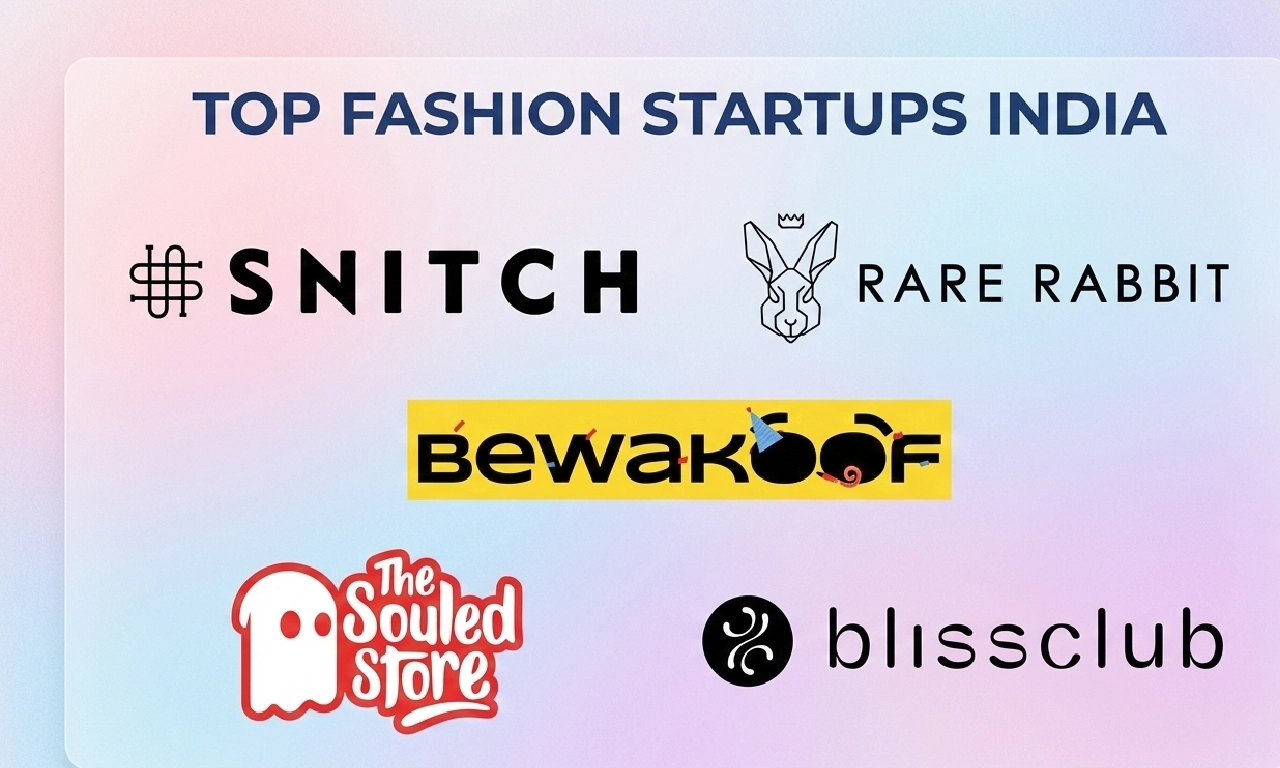
India's fashion startup ecosystem is experiencing explosive growth, with direct-to-consumer (D2C) brands reshaping how millions consume clothing. From sustainable fashion to AI-powered quick commerce delivery, Indian entrepreneurs are disrupting traditional retail while attracting billions in venture capital. The sector is primed for IPOs, global expansion, and category leadership across multiple fashion segments.
Understanding India's Fashion Startup Revolution
What Defines a Fashion Startup in India?
A fashion startup is a technology-enabled clothing and apparel company that leverages digital-first distribution, rapid product iteration, and operational efficiency to challenge traditional retail models. Unlike established fashion houses that rely on heritage and brand legacy, fashion startups compete on speed, customization, and direct customer relationships.
Indian fashion startups span distinct categories - D2C menswear brands (Snitch), pop culture merchandise (The Souled Store), sustainable fashion (Nicobar, Doodlage), activewear for niche audiences (BlissClub), and fashion tech platforms (Zilo). Each operates with lean organizational structures, data-driven inventory management, and customer-centric product development that contrasts sharply with legacy retail's approach to fashion commerce.
Why Indian Fashion Startups Are Scaling at Unprecedented Speed
Three macro factors converge to fuel this boom:
Consumer Behavior Shift: India's 700+ million internet users increasingly prefer convenience, personalization, and direct brand interaction. Urban millennials and Gen Z prioritize value-for-money, custom fits, and authentic brand stories - precisely what D2C startups deliver. Rather than browsing department store shelves, consumers now discover brands through Instagram, TikTok, and YouTube, where startups maintain lower customer acquisition costs[1] than legacy retailers.
Technology Infrastructure Maturity: Cloud-based inventory management, affordable logistics networks (enabled by Zomato, Dunzo, and Blinkit quick commerce), and AI-powered demand forecasting have decimated barriers to entry. A fashion startup no longer requires 50 physical stores to reach national scale - smart unit economics, social media marketing, and omnichannel distribution suffice.
Capital Inflow: Indian fashion startups raised over $300 million in 2024-2025 across seed, growth, and pre-IPO funding rounds. Bengaluru and Mumbai host 80%+ of fashion startup headquarters, supported by dedicated VCs (Titan Capital, Fireside Ventures, 100X.VC, Info Edge) backing the sector. Public market debuts in adjacent sectors (e-commerce, D2C) have validated investor appetite for consumer brands at scale.
Categories Reshaping India's Fashion Market
Indian fashion startups cluster around five distinct categories, each addressing unique consumer pain points:
Menswear D2C: Redefining Male Fashion
Snitch and Rare Rabbit dominate this space, competing on trend velocity and affordability. Snitch, founded in 2019, achieved ₹520 crore revenue by FY25 with 55+ offline stores and 40-45% of revenue from physical retail. The brand targets Gen Z and millennial males with fast-fashion aesthetics at price points (₹500-₹3,000) below international brands yet aspirational relative to legacy Indian retailers.
Rare Rabbit occupies the premium casual segment, with ₹637 crore FY24 revenue and ₹75 crore net profit making it among India's most profitable fashion startups. The brand differentiates through GOTS-certified organic fabrics, merino wool basics, and lifestyle positioning for professionals seeking "quiet luxury."
Why menswear matters: Men's fashion has historically lacked strong D2C presence in India, creating a whitespace opportunity. Snitch and Rare Rabbit fill this gap with mobile-first discovery, zero-inventory models, and subscription-enabled repeat purchases.
Streetwear & Customization: Gen Z Expression
Bewakoof pioneered user-voted print designs and pop culture tees, accumulating 42 million monthly app users. Founded in 2012 by IITians, it reported ₹500 crore projected revenue for FY25, reaching profitability through zero-inventory manufacturing and regional Indian language messaging (Hindi, Marathi, Bengali prints).
The Souled Store generates ₹365 crore revenue by licensing Marvel, Disney, and Indian celebrity content into apparel and accessories. Its FY24 profitability (₹18.2 crore net profit) demonstrates the power of fandom as a purchasing driver consumers pay premiums for licensed merch over generic basics.
Why this matters: These brands prove that streetwear and pop culture merchandise are no longer niche categories. Size-inclusive designs (XS–6XL), AR virtual try-ons, and influencer collaborations have widened addressable markets while reducing return rates by 15-20%.
Women's Activewear: Performance Meets Fashion
BlissClub targets fitness-focused women with sustainability-certified leggings, sports bras, and athleisure sets. While it reported ₹87 crore FY24 revenue with operating losses of ₹44 crore, the brand raised $26 million in growth funding signaling investor belief in India's fitness economy maturation. The activewear segment benefits from rising health consciousness, rising disposable incomes among urban women, and Instagram's role in normalizing fitness culture.
Sustainable Fashion: Craftsmanship Meets Scale
Sustainable fashion startups are emerging as a differentiated category:
Nicobar uses bamboo, Tencel, and organic cotton in minimalist apparel with eco-friendly production and sustainable packaging. Founded in 2016 by Simran Lal and Raul Rai, it emphasizes chemical-free manufacturing and natural materials over disposable fast fashion.
Doodlage transforms textile waste and deadstock fabric into unique patchwork designs, demonstrating that upcycling can scale beyond artisanal small batches. Similarly, Oshadi integrates seed-to-sew supply chains, growing its own organic cotton and focusing on regenerative agriculture creating end-to-end supply chain transparency that appeals to conscious consumers.
Why sustainability works: India's waste textile problem is immense over 5 million tons annually. Sustainable fashion startups that transform this waste into premium products while creating artisan livelihoods (Grassroot by Anita Dongre, Ka-Sha) command brand loyalty and willingness-to-pay premiums of 20-30% over conventional alternatives.
Fashion Tech: Speed as Strategy
Zilo, founded by former Flipkart and Myntra executives, launched in 2025 with $4.5 million seed funding to deliver fashion and lifestyle products from 250+ brands (Levi's, Puma, The Souled Store) in under 60 minutes. This model combines quick commerce logistics with fashion discovery, enabled by AI-powered style recommendations and home trial/instant return guarantees.
This category emerged because urban fashion shopping remains constrained by fitting room friction and return hassles. Quick-fashion commerce startups (Zilo, Slikk, Newme) address this by bringing try-before-buy to homes within hours.
Top Fashion Startups Redefining India's Style Landscape
| Rank | Startup Name | Headquarters | Founded | Funding Raised | FY24/25 Revenue | Key USP |
|---|---|---|---|---|---|---|
| 1 | Snitch | Bengaluru | 2019 | $40M (Series B) | ₹520 Cr (FY25) | Trend-agile menswear, omnichannel scale |
| 2 | Rare Rabbit | Bengaluru | 2015 | Undisclosed | ₹637 Cr (FY24) | Premium organic fabrics, quiet luxury positioning |
| 3 | Bewakoof | Mumbai | 2012 | $39.5M | ₹500 Cr (Projected) | User-voted designs, zero-inventory model |
| 4 | The Souled Store | Mumbai | 2013 | $29.7M | ₹365 Cr (FY24) | Licensed pop culture merchandise, inclusive sizing |
| 5 | BlissClub | Bengaluru | 2020 | $26M | ₹87 Cr (FY24) | Women's activewear, sustainability focus |
Startup Profiles: Deep Dives into India's Fashion Leaders
1. Snitch: The Menswear Momentum Machine
Website: snitch.co.in | Headquarters: Bengaluru | Total Funding: $40M
Founded: 2019 | Founder: Siddharth Dungarwal | Employees: 500+ | Current Valuation: ₹2,500 crore ($294 million)
About: Snitch started as a B2B apparel platform but pivoted to D2C during COVID-19, capturing the menswear category with trend-forward casual wear (shirts, jeans, jackets, hoodies). The brand operates 55 physical stores across India while maintaining a digital-first acquisition strategy, targeting Gen Z and millennial males priced at ₹500-₹3,000 per item.
USP: Snitch's differentiator is velocity-driven trend agility combined with omnichannel distribution. The founder publicly stated the company targets ₹1,000 crore revenue by FY26 and plans IPO within three years. The brand reinvents its product line every 4-6 weeks based on Instagram trends and TikTok virality, creating FOMO-driven repeat purchases. Unlike legacy menswear brands that plan seasons 9 months in advance, Snitch operates with 6-week lead times, enabling rapid response to fashion trends.
Key Metrics (FY25):
-
Operating Revenue: ₹520 Cr (up 63% YoY)
-
Offline Revenue Contribution: 40-45% of total sales
-
Stores Across India: 55 outlets with plans to reach 100+ by end of 2025
-
Expected Profitability: Net profit of ₹40 crore (FY26 guidance)
Recent Milestones:
-
Raised ₹278.9 crore ($33 million) in Series B from 360 One Asset (June 2025)
-
Valuation jump: 5X increase from previous ₹500 crore to ₹2,500 crore
-
Expanded into womenswear, footwear, and accessories categories (Q2 2025)
What Investors Should Know: Snitch is operationally profitable in core menswear but faces inventory discipline as it diversifies into new categories. The IPO path is credible given profitability, but execution risk remains around maintaining unit economics at scale and managing international expansion (MENA pilot underway).
2. Rare Rabbit: The Profitable Luxury Casual Pioneer
Website: rarerabbit.com | Headquarters: Bengaluru | Total Funding: Undisclosed (estimated $50M+)
Founded: 2015 | Founders: Manish Poddar & Akshika Poddar | Employees: 300+ | Current Valuation: ₹2,100+ crore
About: Rare Rabbit (parent company: House of Rare) builds premium casual menswear using GOTS-certified organic cotton, merino wool, and ethically sourced linen. The brand operates 50+ retail stores and positions itself as "quiet luxury for the Indian professional"—a category absent in organized retail until Rare Rabbit's entry.
USP: Rare Rabbit's profitability moat is rare among D2C fashion startups. With ₹75 crore net profit in FY24 (up 134% YoY), the brand has cracked the code for sustainable D2C operations. This profitability derives from: (1) premium pricing power (₹2,000-₹5,000 per item), (2) efficient supply chain integrating design, manufacturing, and retail, and (3) 50%+ gross margins enabled by vertical integration and fabric sourcing discipline.
Key Metrics (FY24):
-
Operating Revenue: ₹637 Cr (up 69% YoY from ₹376 Cr FY23)
-
Net Profit: ₹75 Cr (up 134% YoY from ₹32.2 Cr FY23)
-
EBITDA Margin: 14.9% (consistent, healthy)
-
Physical Stores: 50+ locations with expansion to 60+ planned
-
Category Expansion: Womenswear (Rareism) and everyday basics (Articale)
Recent Milestones:
-
Approaching IPO readiness with ₹600+ Cr FY24 revenue and consistent profitability
-
Strategic investor interest from family offices and PE firms
-
International expansion pilots in MENA region underway
What Investors Should Know: Rare Rabbit represents the "proven model" for profitable D2C fashion in India. The brand's focus on quality, sustainability, and ethical sourcing insulates it from price competition while its omnichannel presence (50+ stores + online) provides defensive advantages. Watch for category expansion execution (womenswear, footwear) as the primary growth lever.
3. Bewakoof: The Community-Driven Youth Brand
Website: bewakoof.com | Headquarters: Mumbai | Total Funding: $39.5M
Founded: 2012 | Founders: Prabhkiran Singh, Siddharth Munot | Employees: 375+ | Parent: Aditya Birla Group (TMRW) - acquired majority stake
About: Bewakoof pioneered user-generated design contests where customers vote on prints before production, eliminating inventory risk. The brand now spans t-shirts, joggers, dresses, and accessories at ₹300-₹1,000 price points, with 42 million monthly app users and strong Gen Z loyalty through regional language messaging and meme-inspired designs.
USP: Bewakoof's community-driven model creates network effects rare in fashion retail. By involving users in design selection, the brand builds emotional investment customers feel ownership of products they voted into existence. This drives organic word-of-mouth and retention rates of 25%+ (vs. 15-20% for competitors).
Key Metrics (FY24/25):
-
Operating Revenue: ₹500 Cr (projected FY25, up from ₹300 Cr FY23)
-
Monthly Active Users: 42 million (app-driven)
-
Profitability Status: Path to profitability (managed losses through cost control)
-
Regional Language Penetration: 60%+ of traffic from Tier 2/3 India
Recent Milestones:
-
Acquired by Aditya Birla Group's TMRW (now majority stake holder) in 2022
-
Loss reduction: ₹12.7 crore (FY23) down 58% from ₹30.7 crore (FY22)
-
Scaling profitability through operational efficiency and procurement optimization
What Investors Should Know: Bewakoof's path to profitability is a case study in operational discipline. The zero-inventory model eliminates overstock risk, but brand commoditization risk persists if competitors replicate the community voting mechanic. The Aditya Birla backing (₹200 Cr investment in FY23) provides stability but may dilute founder autonomy as growth scales.
4. The Souled Store: Licensing as a Fashion Moat
Website: thesouldedstore.com | Headquarters: Mumbai | Total Funding: $29.7M
Founded: 2013 | Founders: Harsh Lal & Others | Employees: 150+ | Current Valuation: ~₹1,500 crore (estimated)
About: The Souled Store monetizes fandom through licensed merchandise from Marvel, Disney, Indian celebrities, and sports icons. The brand's ₹365 crore FY24 revenue (up 54% YoY) and ₹18.2 crore net profit demonstrate that entertainment IP can drive fashion retail at scale.
USP: The Souled Store's licensing moat is defensible in ways generic D2C brands struggle to replicate. By securing exclusive digital rights to Marvel, Disney, and Bollywood IP, the brand creates products competitors cannot produce. This pricing power (tees at ₹600-₹1,500, hoodies at ₹1,500-₹2,500) combined with size-inclusive designs (XS–6XL) enables profitable scaling without heavy discounting.
Key Metrics (FY24):
-
Operating Revenue: ₹365 Cr (up 54% YoY)
-
Net Profit: ₹18.2 Cr (EBITDA margin ~12%)
-
Gross Margin: 55-60% (enabled by IP premiums)
-
Physical Stores: 36 locations (targeting 200 by 2026)
-
Customer Base: 5 million active customers
Recent Milestones:
-
Secured exclusive Bollywood and sports IP partnerships
-
Rapid offline expansion (36 stores in 2024, 200 planned by 2026)
-
AR try-on technology reducing return rates by 15-20%
What Investors Should Know: The Souled Store's licensing strategy is profitable but carries concentration risk IP availability and exclusivity terms depend on licensor negotiations. Watch for: (1) category expansion beyond apparel (footwear, accessories), (2) international licensing partnerships, and (3) sustainability positioning (organic cotton, eco-friendly packaging) to future-proof against licensing dependency.
5. BlissClub: Women's Activewear Ambition
Website: blissclub.com | Headquarters: Bengaluru | Total Funding: $26M
Founded: 2020 | Founder: Kaushik Muthyala | Employees: 127 | Current Valuation: ~₹500 crore (estimated)
About: BlissClub targets fitness-focused women with sports bras, leggings, and athleisure sets made from sustainable, breathable fabrics. Founded in 2020 by Kaushik Muthyala, it raised $5.3 million in a recent debt/equity round despite FY24 operating losses of ₹44 crore on ₹87 crore revenue.
USP: BlissClub's sustainability + fit precision positioning differentiates it in India's underpenetrated activewear market. The brand emphasizes proper fit testing (via 3D body scanning technology) and organic, cruelty-free fabrics addressing pain points legacy sportswear brands ignore. For Indian women, finding well-fitting, ethically made activewear has been historically difficult, creating a genuine whitespace.
Key Metrics (FY24):
-
Operating Revenue: ₹87 Cr (up 27% YoY)
-
Operating Loss: ₹44 Cr (unit economics optimization underway)
-
Funding: $26 million raised (2021-2024)
-
Category Focus: Sports bras, leggings, athleisure, swimwear
Challenges:
-
Unit economics under pressure: Activewear requires high-quality raw materials (merino wool, recycled synthetics) pushing COGS
-
Customer acquisition expensive in fitness niche: CAC ~₹400-600 per customer
-
Retention improving but still in optimization phase
What Investors Should Know: BlissClub is betting on India's fitness economy maturation. As gym penetration, yoga classes, and at-home fitness grow (especially post-pandemic), activewear demand will follow. However, the startup must achieve unit economics profitability within 18-24 months to justify growth capital. Competitors include international brands (Lululemon, Athleta) entering India plus incumbent apparel giants pivoting to activewear.
Why Fashion Startups Matter to Founders and Investors
For Founders:
Fashion startups solve genuine consumer pain points limited choice, poor fit, unsustainable production, and impersonal shopping experiences. India's scale (1.4 billion people, 700+ million internet users), rising disposable incomes, and shifting preferences toward sustainability metrics and self-expression create a massive opportunity. The unorganized sector (65%+ of apparel retail) remains fragmented, leaving room for tech-enabled brands to consolidate value and capture pricing power.
For Investors:
The top fashion startups achieve 2-3x revenue multiples if they reach operational profitability. Rare Rabbit (₹75 crore profit, ₹637 crore revenue) trades at ~3x revenue - standard for scaled D2C brands. Network effects (supply chain, logistics, brand IP) create defensibility for leaders. Category dominance (menswear: Snitch, activewear: BlissClub, pop culture: The Souled Store) provides moats against commoditization. IPO pipelines (Rare Rabbit, Snitch targeting 2025-26) offer clear exit pathways.
Challenges Fashion Startups Face
Unit Economics Pressure:
Fashion D2C operates on thin gross margins (50-60% for apparel, 40-50% for accessories). After accounting for customer acquisition costs (₹200-400 per order), logistics (₹50-100 per shipment), and returns processing (15-25% return rates), net margins compress to 10-15%. Snitch's guidance of ₹40 crore profit on ₹520 crore revenue (7.7% net margin) illustrates the scale required to achieve absolute profitability.
Inventory Risk:
Unlike Bewakoof's zero-inventory model, brands like Rare Rabbit and The Souled Store carry inventory risk across seasons and SKUs. Fashion demand is notoriously fickle - a print or style that sells at 95% velocity in Mumbai may languish at 40% velocity in Pune. Startups must invest in demand forecasting and markdown strategies, or risk dead inventory eating into profitability.
Retail Expansion Capital Intensity:
Snitch's expansion from 55 to 100+ stores requires ₹20-30 lakhs per store in capex (leasehold improvements, fixtures, staff training). Scaling to 200+ stores across 30+ cities demands ₹200-300 crore capex explaining why funding rounds are substantial and profitability timelines extend.
Sustainability Compliance and Transparency:
As consumers demand ethical production and transparency, startups face pressure to audit supply chains, secure certifications (GOTS, Fair Trade, B Corp), and communicate impact. This adds operational friction and cost sustainable fashion startups spend 15-25% more on supply chain compliance than conventional brands.
Pricing Pressure vs. Fast Fashion Giants:
Indian consumers remain price-sensitive. H&M, Zara, and Uniqlo have entered India at aggressive price points, while unbranded local players offer ₹200-300 basics. Startups charging premium prices (Rare Rabbit at ₹3,000+) must justify premiums through brand storytelling, fit, or sustainability - which requires heavy marketing investment.
Talent Retention:
Fashion operations require design, merchandising, supply chain, and retail management expertise - 3skills concentrated in major metros. Attrition rates in apparel startups are high (20-30% annually), driving recruitment costs and institutional knowledge loss.
How GrowthJockey Accelerates Fashion Startups
GrowthJockey operates as a full-stack venture architect, embedding operational excellence into fashion startups from ideation through scale. Fashion entrepreneurship is uniquely complex - requiring simultaneous mastery of design, supply chain, retail operations, and digital marketing. Most fashion founders excel in one domain but lack frameworks to integrate the others.
GrowthJockey's approach to fashion startups focuses on:
1. Unit Economics Validation
Before launching inventory, GrowthJockey helps founders isolate true unit economics: CAC (customer acquisition cost), LTV (lifetime value), gross margin, and fulfillment costs. This prevents the common misstep of profitable-looking gross margins masking negative unit economics once logistics and returns are factored in. Fashion startups typically target LTV:CAC ratios of 3:1 or higher.
2. Supply Chain Architecture
From fabric sourcing to last-mile delivery, supply chain inefficiency kills margins faster than any other factor. GrowthJockey maps the entire supply chain, identifying capex requirements, manufacturing lead times, and inventory management cadences. This is where startups like Rare Rabbit differentiate—by owning key supply chain nodes, they control quality and delivery velocity while competitors remain dependent on third parties.
3. D2C to Omnichannel Transition
Initial validation happens through pure D2C (online only). But as startups grow (₹50+ crore revenue), retail expansion becomes necessary balancing online efficiency and starting a omnichannel business model. GrowthJockey helps founders plan this transition, including store economics (payback periods, margin requirements), franchise vs. company-owned store models, and supply chain adaptations.
4. Data-Driven Assortment Planning
Beginner fashion founders make emotional product selection decisions. GrowthJockey introduces data discipline using sales velocity, return rates, and customer feedback to retire slow SKUs and scale winners. This mirrors how Snitch reinvents product every 6 weeks based on trend data.
5. Sustainability Positioning & Compliance
As consumers prioritize sustainability metrics and regulations tighten, startups need frameworks for supply chain transparency, certification pathways (GOTS, Fair Trade), and impact storytelling. GrowthJockey helps startups integrate sustainability without inflating costs or sacrificing margins.
6. Capital Strategy & IPO Readiness
For startups targeting IPOs (Rare Rabbit, Snitch, The Souled Store), GrowthJockey ensures financial hygiene, standardized KPI dashboards, and governance frameworks that attract institutional capital. This includes financial modeling for Series A/B transitions and IPO preparation timelines.
Fashion startups require more than algorithms and AI - they require operational discipline, founder coaching, and venture architecture rooted in industry nuance. GrowthJockey embeds this expertise to accelerate fashion startups from proof-of-concept to category leadership.
How to Start Your Own Fashion Brand in India
Starting a fashion brand in India requires strategic sequencing of decisions across design, capital, and distribution:
Phase 1: Validation (0-6 months, ₹2-5 lakhs capital)
Validate product-market fit before investing in inventory:
-
Identify a specific consumer pain point (fit, sustainability, style gap, price point)
-
Create 20-30 SKUs reflecting your point of view
-
Launch on Instagram, TikTok, and personal website using print-on-demand (POD) or dropshipping
-
Target organic communities (subreddits, Facebook groups, Discord servers) rather than paid advertising
-
Achieve 25%+ repeat order rate and CAC below ₹200-300 before scaling
Phase 2: Traction (6-12 months, ₹5-15 lakhs capital)
Transition from POD to owned inventory once demand clarity emerges:
-
Source manufacturers for your top 50 SKUs (MOQ 200-500 units typically)
-
Build social proof (5,000+ Instagram followers, 1,000+ monthly orders)
-
Optimize gross margins to 55%+ through negotiated procurement and eliminating margins for POD suppliers
-
Establish repeat order rate of 30%+ and customer retention of 20%+
-
Calculate unit economics: If CAC is ₹300, LTV must be ₹900+ (3:1 ratio)
Phase 3: Scale (12-24 months, ₹20-50 lakhs capital)
Transition to professional operations and geographic expansion:
-
Register as formal entity (FMCG/apparel classification)
-
Establish supply chain with 2-3 manufacturing partners (risk diversification)
-
Launch Tier 1 city expansion (Mumbai, Bengaluru, Delhi, Hyderabad)
-
Begin paid customer acquisition (Instagram/Google ads) targeting ₹250-400 CAC
-
Scale monthly revenue to ₹10-20 lakhs through omnichannel (DTC + marketplace channels like Myntra, Flipkart, Amazon)
Phase 4: Growth Stage (24+ months, ₹1-5 crore capital via angel/seed investors)
Prepare for institutional funding:
-
Achieve ₹50+ lakhs monthly revenue ($60,000+ MRR)
-
Demonstrate gross margin of 55%+ and unit economics with LTV:CAC >3
-
Launch offline retail (pop-ups evolving to owned stores)
-
Expand product categories while maintaining brand coherence
-
Hire experienced finance, supply chain, and merchandise leaders
-
Position for seed funding (₹50-100 lakhs) from angel networks or micro-VCs
Most Profitable Startup in India: Profitability Benchmarks
The question "What's the most profitable startup in India?" has a fashion-centric answer: Rare Rabbit. Among young brands (founded 2012 onwards), Rare Rabbit's ₹75 crore net profit (FY24) on ₹637 crore revenue represents the gold standard for profitable D2C fashion.
However, profitability definitions vary:
-
Absolute profit: Rare Rabbit (₹75 Cr), Snitch (₹40 Cr guidance)
-
Profit margin: Rare Rabbit (11.8%), The Souled Store (5%)
-
Capital efficiency: Rare Rabbit and Snitch (bootstrapped or light capital relative to revenue)
Profitability in fashion comes from unit economics discipline, not scale alone. Profitable startups obsess over:
-
Gross margin: 55%+ for apparel, 60%+ for accessories
-
Customer acquisition efficiency: CAC below ₹300
-
Retention: 25%+ repeat order rate
-
Inventory turnover: 4-6x annually (avoid dead stock)
-
Operational leverage: Fixed costs decline as % of revenue
Which Clothing Business Is Most Profitable in India?
The most profitable clothing business models in India cluster around:
1. Niche/Category Dominance (e.g., Snitch in menswear, BlissClub in activewear)
-
Reduced competition from generalists
-
Ability to build category authority and pricing power
-
Easier to market to defined audience
2. Licensing/IP-Based (e.g., The Souled Store with Marvel, Bollywood)
-
Premium pricing enabled by exclusive IP
-
Defensible moat against direct competitors
-
Higher gross margins (55-65%)
3. Vertical Integration (e.g., Rare Rabbit)
-
Controls manufacturing, design, and retail
-
Eliminates middleman margins
-
Enables quality consistency and velocity
4. Sustainable/Ethical Positioning (e.g., Nicobar, Doodlage, Oshadi)
-
Willingness-to-pay premium of 15-30% for conscious consumers
-
Emerging as defensible positioning as ESG investing grows
-
Attracts impact investors willing to support longer profit timelines
5. Direct-to-Consumer (D2C) (e.g., Snitch, Bewakoof)
-
Eliminates distributor margins (typically 25-35%)
-
Direct customer data for personalization
-
Lower inventory risk through agile assortment planning
Capital Requirements: How Much to Start a Clothing Brand
Investment needed varies dramatically by model and scale ambition:
| Model | Capital Required | Timeline to Profitability | Key Risks |
|---|---|---|---|
| Online Only (POD) | ₹2-5 lakhs | 6-12 months | Low gross margins, high CAC |
| Boutique/Small Store | ₹5-10 lakhs | 12-18 months | High fixed costs, location dependency |
| D2C with Own Inventory | ₹10-25 lakhs | 12-24 months | Inventory risk, supply chain complexity |
| Omnichannel (Online + 5-10 Stores) | ₹50 lakhs - ₹2 crore | 24-36 months | Retail capex, HR scaling |
| Category Player (50+ stores, national) | ₹5-20 crore | 36-60 months | Capital intensity, execution risk |
Key Takeaway: Most founders underestimate working capital required for inventory. A ₹10 lakhs investment in POD validation can scale, but transitioning to owned inventory (₹20+ lakhs MOQ) requires deliberate fundraising or profitability reinvestment.
Top Fashion Startups on Shark Tank India
Shark Tank India has become a launchpad for apparel brands targeting Indian mass consumers. Notable fashion startups backed by the Judges of Shark Tank from the show include:
Angrakhaa (Shark Tank Season 1)
Size-inclusive clothing brand founded by Vishakha Bhaskkar and Asana Riamei, challenging the "fat tax" (higher pricing for larger sizes). The brand generated ₹1.10 crore FY22-23 revenue with sizes XXS–5XL. Received backing from Namita Thapar on the show.
Culture Circle (Shark Tank Season 2)
Sneaker and streetwear brand founders Devansh Jain and Nawal Ackshay launched an iconic sneaker line with Instagram-first distribution. Valuation reached ₹400 crore, demonstrating investor appetite for youth-focused streetwear. It quickly became one of the best shark India deals.
Dorabi & Aamili (Shark Tank Season 4)
Sustainable fashion brand duo showcasing hand-dyed ethical apparel. Dorabi focuses on 100% hand-dyed innovation, while Aamili targets professional working women. Deal: ₹1 crore for 4% equity (Anupam Mittal, Aman Gupta).
Farda (Shark Tank Season 3)
Hip-hop and streetwear brand targeting Gen Z with funky, customizable designs. Secured ₹30 lakhs investment for 20% equity on the show, valuing the brand at ₹1.5 crore.
DChica (Shark Tank Season 3)
Teen fashion brand founded by Richa Kapila and Vani Chugh. Recognized for targeting an underserved demographic (13-19 year-old girls) with affordable, trendy designs. Received backing from Namita and Vineeta.
Lesson from Shark Tank Fashion: The shows validate that founder passion + niche positioning + authentic storytelling resonate with investors more than generic D2C plays. Brands that solve specific problems (size inclusion, ethical production, generational fit) attract higher valuations and repeat purchase loyalty.
Conclusion: The Next Frontier for Indian Fashion Innovation
India's fashion startup ecosystem is maturing from experimental into proven. The proof points are unambiguous: Rare Rabbit's ₹75 crore profit, Snitch's trajectory to ₹1,000 crore revenue, The Souled Store's 54% YoY growth, and successful Shark Tank debuts signal a category reaching inflection.
The next wave will differentiate on three fronts:
1. Operational Excellence: Profitability will separate leaders from followers. Fashion startups that obsess over unit economics, supply chain efficiency, and retention from Day 1 will create durable competitive advantages. GrowthJockey works with founders to embed this discipline.
2. Sustainability Integration: As consumer expectations and regulations tighten, brands that integrate sustainability from inception (Oshadi's seed-to-sew model, Doodlage's upcycling) will command premiums and attract capital seeking impact.
3. Category Consolidation: Rather than competing as generalists, the next generation will own categories. Menswear (Snitch), activewear (BlissClub), pop culture merchandise (The Souled Store), and ethical basics (Rare Rabbit) each have clear leaders. Founders should identify whitespace categories women's workwear, sustainable luxury, regional ethnic fashion and own them completely.
Founders: The unorganized sector (65%+ of Indian apparel retail) represents a ₹1.5 trillion opportunity waiting for tech-enabled rollups. Start small validate PMF with ₹5 lakhs and 1,000 customers before raising institutional capital.
Investors: Fashion startups achieving unit economics profitability trade at 2-3x revenue multiples. IPO pipelines (Rare Rabbit, Snitch targeting 2025-26) provide clear exit pathways. Now is the moment to back the next category leaders.
GrowthJockey - Full Stack Venture Builder helps both founders and investors navigate this transition - from idea-stage validation to enterprise-scale operations. Contact us to build India's next successful startup story.
Related Blogs
If you’re exploring startup ideas, business models, or sector-specific opportunities, the guides below can help you go deeper. Each resource covers a different stage or industry within the startup ecosystem - making it easier to compare ideas, understand execution paths, and identify opportunities relevant to your goals.
FAQs on Fashion Startups in India
Q1. What's the difference between D2C fashion brands and traditional retail?
D2C owns customer relationships via websites/apps/social, gaining data personalization, 25-35% margin savings, agile inventory, authentic storytelling. Trade-offs: higher CAC, complex logistics. Examples: Snitch, Bewakoof.
Q2. How much funding do early-stage fashion startups typically raise?
Pre-Seed/Seed: ₹10-50 lakhs (angels/accelerators). Series A: ₹1-5 crore (₹50+ lakhs MRR). Series B+: ₹10+ crore (expansion). Snitch: ₹5Cr seed → ₹110Cr A → ₹278Cr B.
Q3. What are the key KPIs investors evaluate in fashion startups?
CAC <₹300, LTV:CAC 3:1+, Gross Margin 55%+ (apparel), Repeat Rate 25%+, Unit Economics profitability, 10-20% MoM growth, 60-75% Retention.
Q4. Why are sustainable fashion startups gaining investor interest?
Gen Z/millennials (40%+ consumers) demand ethics; EU/UK regulations loom; 15-30% price premiums boost margins. Addresses 5M+ tons textile waste. Examples: Nicobar, Doodlage.









Industries
Growth
Operations
Technology